
Honey Locust
Researched by Danielle Thompson
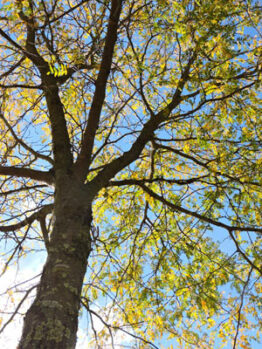 Species: Gleditsia triacanthos
Common name: Honeylocust
Family: Fabaceae
Clade: Angiosperm
Coordinates: 39.70734247, -75.11626766

A tag using this number is placed near the tree.
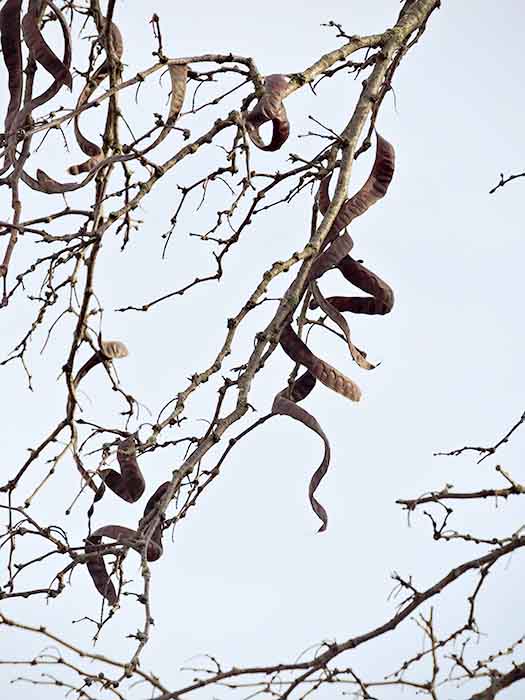
Honey locust trees, or Gleditsia triacanthos, are native to the central United States and part of the Fabaceae (pea/bean) family. However, unlike most legumes, honey locusts do not have symbiotic relationships with nitrogen-fixing root bacteria. The honey locust is a sturdy tree commonly planted for erosion control and windbreaks. However, it tends not to be planted in non-native areas since it is considered aggressive. The trees prefer moist soils, though they can grow in drier conditions. Honey locusts also prefer direct sunlight and need around 35 inches of rain annually. They are mainly found near rivers, in forests or grasslands, and can live up to 100 years in the wild.
The wood of the honey locust is durable and coarse-grained. Native Americans used it to make hunting bows. It has also been used for furniture but to a lesser extent than that of some trees.


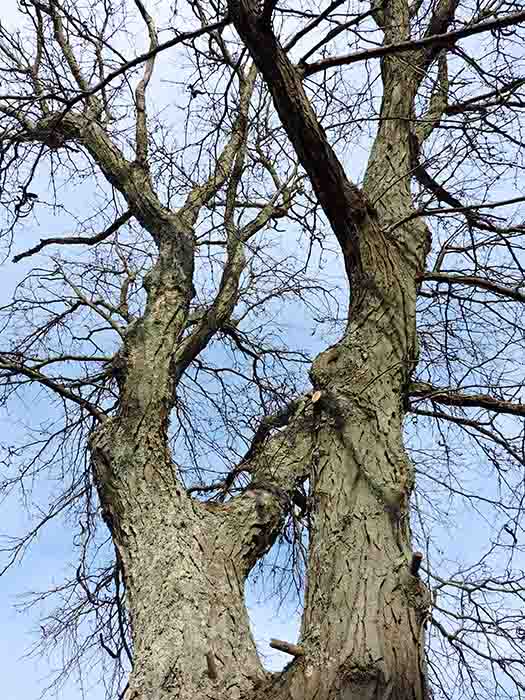
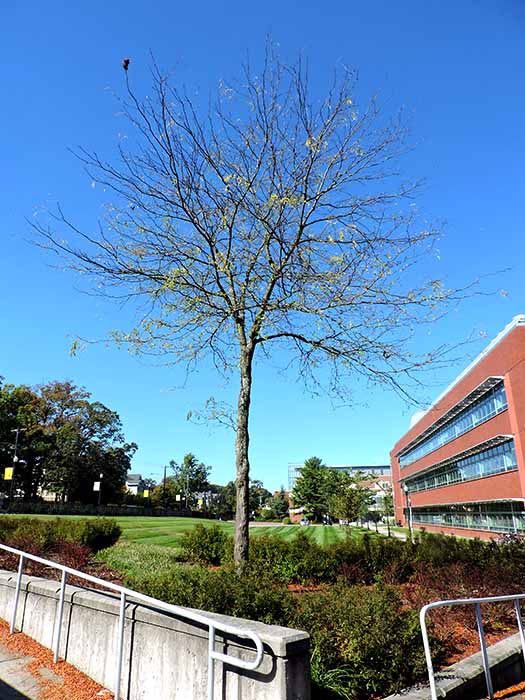


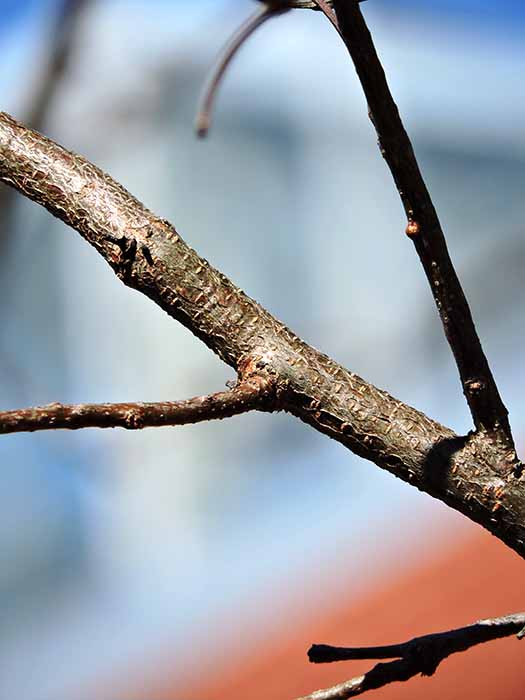


Campus Species Map
Researcher’s Biography

Danielle Thompson
Danielle Thompson earned her degree in Environmental Science in 2023.
Suggested Citation:
Thompson, Danielle. (2024, Dec). Honey-locust. Rowan University Arboretum. https://arboretum.rowan.edu/trees/honey-locust/
Questions to Explore
- How was the tree used by Native Americans?
- How do common Honey Locusts differ from thornless honey locusts?
- How was the Honey Locust named?
- Why are these trees considered aggressive in non-native areas?
- How does having thorns impact the tree’s survivability?
References
Arboris. (2023). Plant Sterols.
| Link
Burns, R., & Honkala, B. (1990). Agriculture Handbook 654th ed., 2, pp. 358–365. U.S. Department of Agriculture.
Ertekin, M. & Kirdar, E. (2010). Effects of seed coat colour on seed characteristics of honeylocust (Gleditsia triacanthos). African Journal of Agricultural Research 5(17), pp. 2434-2438).
Iowa State University (2023). ISU Forestry Extension – Tree Identification: Honey Locust (Gleditsia triacanthos). | Link
Kim, K., Adams, N., & Friedman, H. (2016). Honey Locust. Yale Nature Walk; Yale University. | Link
Nebraska Forest Service. (2022). Honeylocust. NFS. | Link
NCSU. (n.d.). Gleditsia triacanthos var. inermis. NC State Extension. | Link
Pandey, K. B., & Rizvi, S. I. (2009). Plant polyphenols as dietary antioxidants in human health and disease. Oxidative Medicine and Cellular Longevity, 2(5), 270–278. | Link