
American Persimmon
Researched by Aedan Rosolia
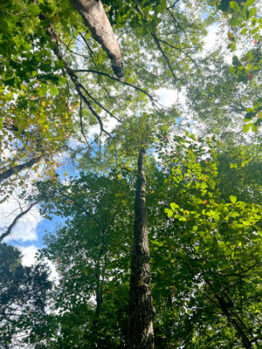 Species: Diospyros virginiana
Common name: Common Persimmon, American Persimmon
Family: Ebenaceae
Clade: Angiosperm (non-flowering seed plants)
Coordinates: 39.71199559, -75.12344093

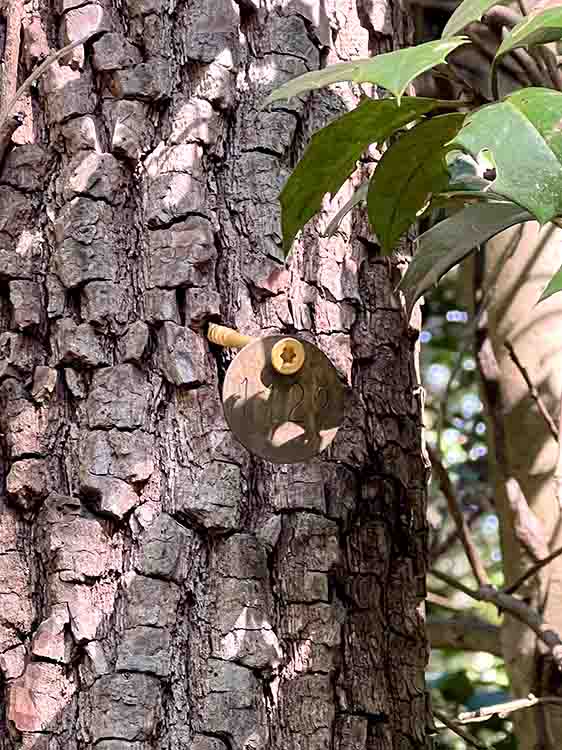
A tag using this number is placed near the tree.
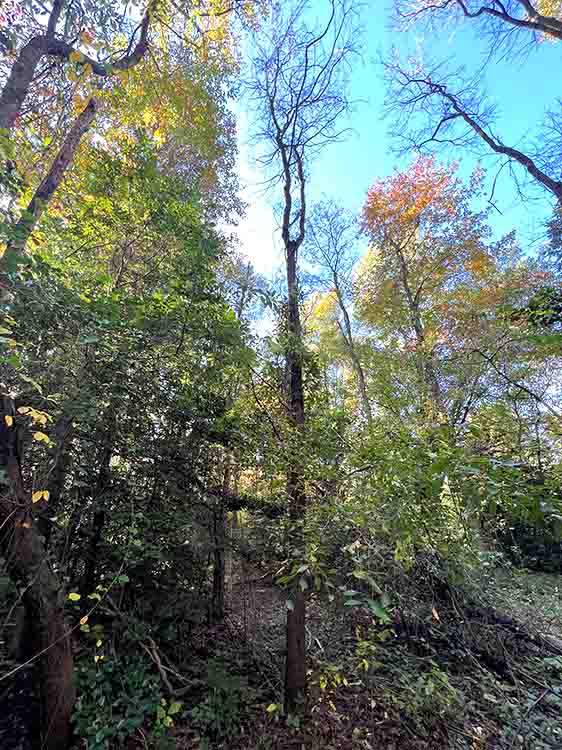
In maturity, American persimmon, or Diospyros virginiana, has dark brown/grayish bark divided into squarish blocks. Mature trees typically range from 30 to 60 feet tall, with some stretching as high as 90 feet. The species has incredible strength underground thanks to its tap root system, a dominant, central feature that anchors it well and helps prevent soil erosion.
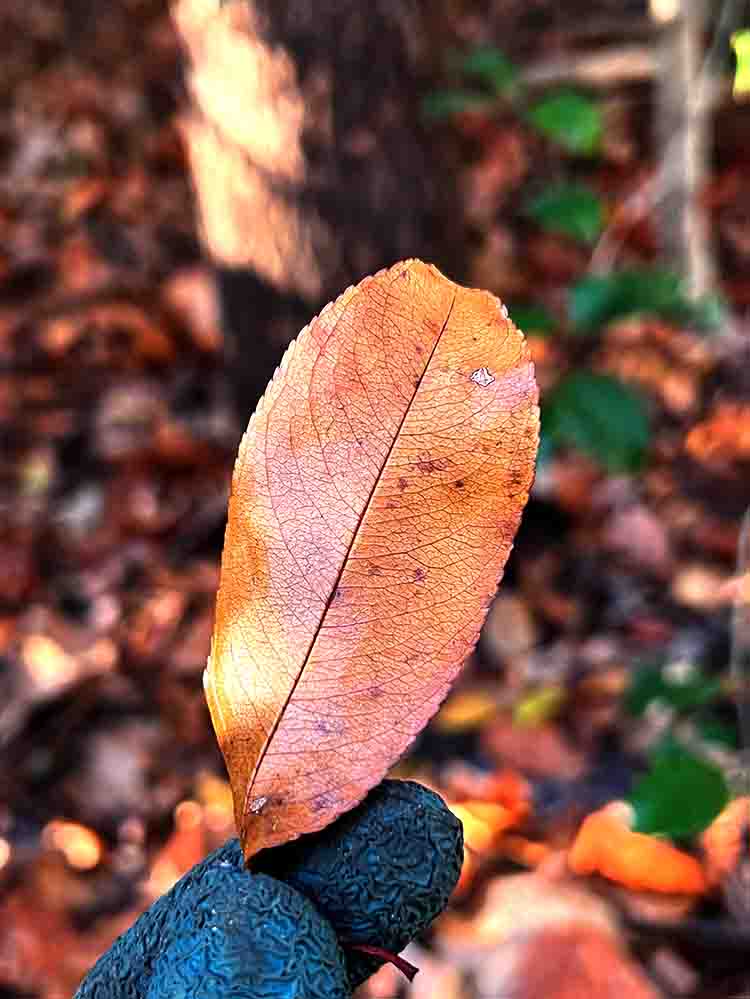
It features simple, oblong, or lanceolate leaves measuring two to six inches long with smooth margins. The leaves appear dark green in the spring and turn yellow-green or reddish-purple in the autumn before dropping. A flowering tree, the American persimmon develops inconspicuous, bell-shaped, fragrant white-green flowers from May to June.
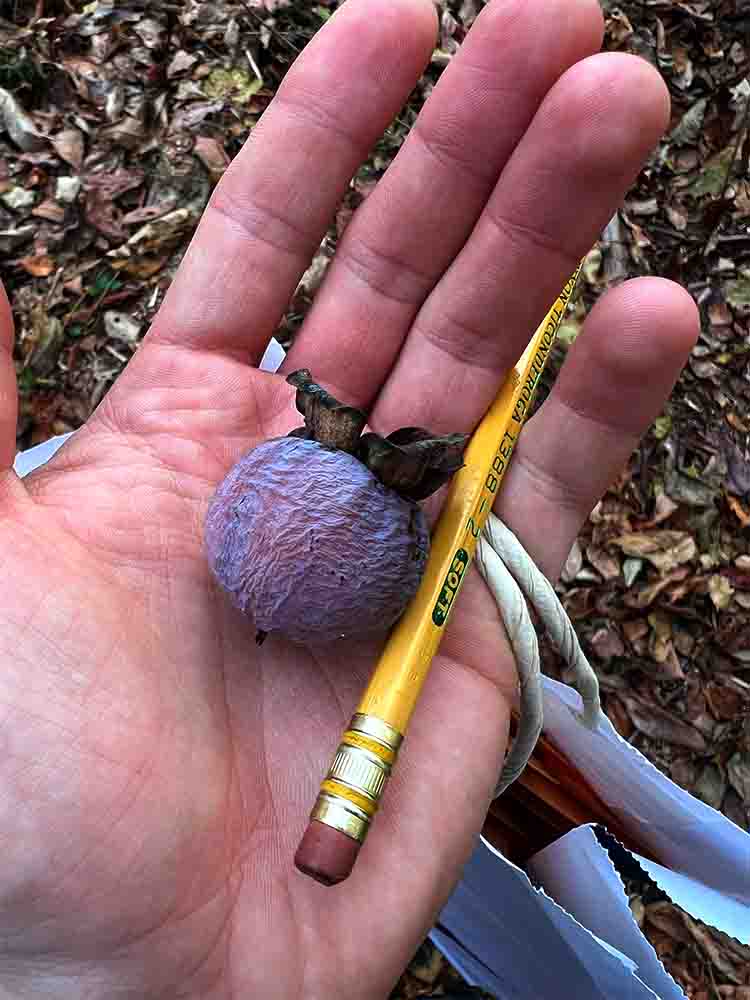
Considered dioecious or unisexual, the tree needs both a male and a female flower to reproduce. The staminate, or male flowers, appear in two to three cymes or clusters. The female pistillate flowers are sessile, meaning they bloom singularly on a short stalk and are larger than the male flowers. When the female flower is pollinated by honey, bumblebees, and secondarily by flies, it grows into an edible fruit. Persimmon fruits grow from late summer to winter but only ripen after the first frost. Ripe fruits have a wrinkled exocarp or skin.




Campus Species Map
Researcher’s Biography
 Aedan Rosolia
 earned a Bachelor of Geography with a Minor in Art and a Minor in Music (2025).
Suggested Citation:
Rosolia, Aedan. (2023, Dec). Persimmon. Rowan University Arboretum. https://arboretum.rowan.edu/trees/persimmon/
Questions to Explore
- Where are American Persimmon trees found and why?
- What are the historical uses of the American persimmon?
- What other native plants date back to the Pleistocene?
References
Boone, M. J., Davis, C. N., Klasek, L., del Sol, J. F., Roehm, K., & Moran, M. D. (2015). A Test of Potential Pleistocene Mammal Seed Dispersal in Anachronistic Fruits using Extant Ecological and Physiological Analogs. Southeastern Naturalist (Steuben, Me.), 14(1), 22-32. | Link
Halls, L. K.Common Persimmon. www.srs.fs.usda.gov. | Link
Hilty, J.American Persimmon. illinoiswildflowers.info. | Link
Missouri Botanical Garden.Diospyros virginiana. missouribotanicalgarden.org.
| Link
Mt. Cuba Center.Common Persimmon. mtcubacenter.org.
| Link
North Carolina State Extension.Diospyros virginiana. plants.ces.ncsu.edu. | Link
Skallerup, H. R. (1953). The Distribution of Diospyros Virginiana L. Annals of the Missouri Botanical Garden, 40(3), 211-225. | Link
TWC Staff.Diospyros virginiana. www.wildflower.org. | Link
Wixted, K.Native Plant Profile: Persimmon. news.maryland.gov. | Link